 |
|
January 29: Richmond Event: SnagAJob Corporate Headquarters Tour and Progressive Work Environment
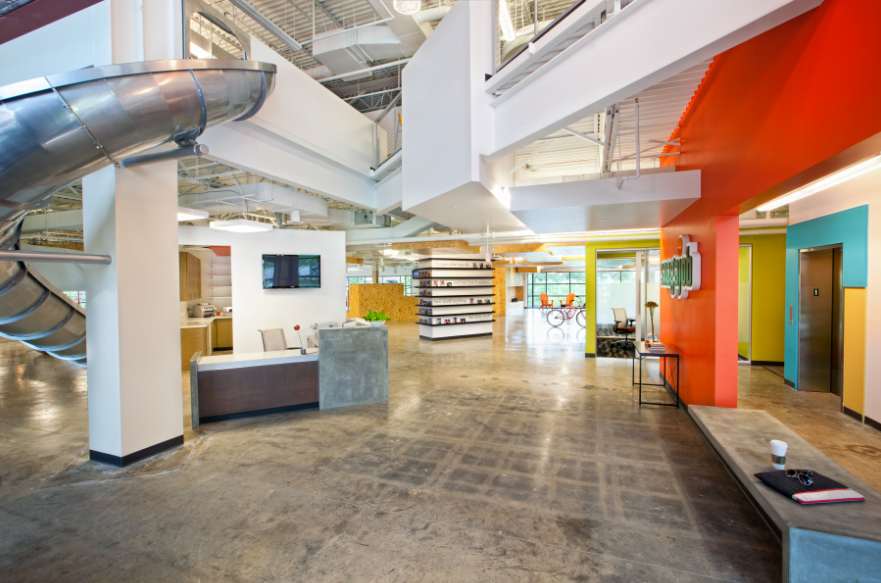
CoreNet Mid-Atlantic Chapter held a Richmond Education Session on Thursday January 29, 2015 for a tour and discussion of its unique, non-traditional corporate environment nearly three years after its unveiling.
This exciting property, designed by Baskervill, has proven three years after its launch that a non-corporate, corporate headquarters works for not only SnagAJob senior management but its varied generational employees and fast-changing technology.
|
Susan Orange , Baskervill Associate Principal, Director of Workplace Strategies and Jessica Bennett, Snagajob HR Specialist provided tours of the facility and discussed the design process. They discussed how Snagajob associates "Snaggers" were included in the design process, the few thing that would be done differently, and that three years later the facility has been well received and has had few changes from the original design. One of the highlights of the evening was watching CoreNet members take a ride down the slide.
Finally, as part of this evening, longtime CoreNet Richmond Board Member, JoAnn Lane, was recognized for her many years of support of the Mid-Atlantic Chapter. She was presented with a gift from the CoreNet Board and standing ovation from the grateful crowd. JoAnn has been an integral part of our CoreNet group in Richmond leading many educational events and promoting our Richmond area to the CoreNet Mid-Atlantic Board in Washington DC. We wish her well in her new adventure.

|
| |
|
|
 |
|
February 4: End User Dinner
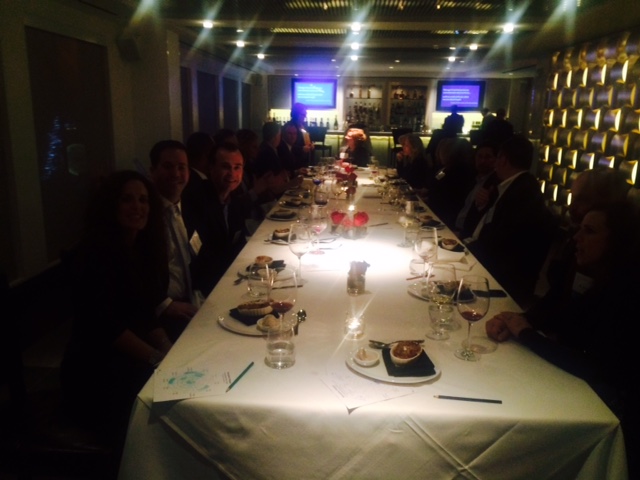
More than 20 end users met Wednesday February 4th at Café Milano to discuss change in the workplace and how to positively handle it using change management. Led by Cheryl Duvall of Avance, LLC the group discussed problems they have faced with moves and office changes as well as discussed ways they overcame these issues.
One quote that Cheryl shared was that during moves and renovations “we over estimate what we have and we underestimate what we’re gonna get”.
|
| |
|
|
 |
|
December 3: ‘Tis the Season for the CoreNet Mid Atlantic Holiday Party
The halls were decked at the annual CoreNet Mid-Atlantic holiday party held at the Washington Golf and Country Club. The Club was a beautiful backdrop for a fun night filled with networking, delicious food and giving thanks for the great year we had as a chapter. The only break in the action came when current President Pierce DeGross, of Hilton Worldwide, thanked the chapter for a successful year and introduced incoming President Stacey Cohen, of Marriott International. Stacey then presented Pierce with a token of appreciation from the chapter for his years of service. At the end of the night, an assortment of unwrapped gifts was collected on behalf of Toys for Tots - thanks to all who donated.
|
| |
|
|
 |
|
November 20: The Human Sustainability Movement and its Impact on Workplace Productivity – A Global Perspective
Moderator, Scott Peltin, Co-Founder & Chief Performance Officer, TIGNUM, led a ground-breaking conversation about the connection of the human sustainability movement with corporate real estate. Scott explained that his work with C-Suite executives includes engineering sustainable high human performance with mindset, nutrition, movement, recovery and preparation for key events. These executives realize that wellness is about more than reducing health care costs.
The panel discussion spoke to the realization that offices can actually make people healthier and more vibrant at the end of each day. The discussion uncovered the neuroscience research-workplace design nexus and provided details about studies that show the connection between architecture, business, medicine, and neuroscience.
|
Panelist Carol Rickard-Brideau, Senior Partner & Office President of Little, shared ways in which neuroscience has contributed to architectural designs. Through lighting, natural finishes and creating engagement opportunities, the built environment can be a contributing factor to employee wellness.
Host and panelist, Laurie Warlick, Managing Director Global Workplace Strategy Practice of CBRE, explained the aspects of the new Workplace 360 office. The “free-addressing” allows for many choices of places to work, including “The Heart” which overlooks the Baltimore Harbor and is the center of the office environment. Laurie talked about the necessity for change management strategies to improve employee engagement, drive organizational change and enhance business performance.
Panelist Phil Williams, Executive Director of Delos, highlighted the features of the WELL Building Standard and how it places health at the center of designing indoor environments by incorporating healthy ideas in seven categories: air, water, nourishment, light, fitness, comfort, and mind. The standard was introduced a few days before our CoreNet program, by the International Well Being Institute (IWBI). And just two weeks ago, Delos and CBRE won the Global Innovators Award at the CoreNet Summit.
The merging of individual health, well-being, and productivity with environmental sustainability is providing new opportunities for Corporate Real Estate Executives (CREs) to bring value to their organizations.
|
| |
|
|
 |
|
October 10: Chapter Volunteers Give Back at CAFB
On Friday, October 10th the chapter held our third volunteer event at the Capital Area Food Bank's main warehouse in NE DC. Our 11 volunteers spent 3 hours sorting donations of canned goods into separate categories and boxing them for distribution to the Food Bank's many local partners. The tasks were expedited by the use of a recently installed conveyor belt, which allowed teams to focus on their specific targets such as green vegetables, beans, or soups, without being overwhelmed by the amount of donations. Click here to view a video of the team in action.
The whole group found the experience fun and rewarding. We hope to have even more volunteers at our next event, which will be held in late Jan/early Feb 2015. Please keep an eye out for our next invitation to register.
|
| |
|
|
 |
|
September 30: Game Changers - A Thought Leadership Panel on Emerging Agile Workplace Strategies, Resources and Best Practices
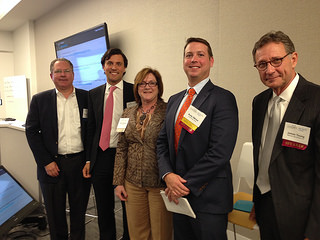
#WorkplaceStrategies was the name of the game (and the official hashtag) for the Game Changers education event held on September 30th. The program, moderated by Chris Kelly, Co-Founder & President of Convene, introduced new tools, technologies and services behind the agile real estate movement. Panelist included Jim Young, Vice President – Real Estate at Marriott and Andy O’Brien, Senior Vice President at JLL. Held in Convene’s on-demand meeting space, large flat screens displayed the live-tweets from attendees for a completely interactive session.
|
|
Marriott International has started offering lobby and meeting space at no charge or low charge, using LiquidSpace online search tool-reservation service. Marriott’s culture of “fail fast and fail forward” allows for innovative ideas. No longer just heads in beds.
JLL recently premiered a new on-line leasing service, HiRise. Targets 5,000 sf and under market (6.5M sf underserved market). Online software is used to search and secure office space with streamlined lease process. Simplified process with license agreements and ability to furnish online, makes delivery of space available in days.
Some takeaways include:
- Technology has turned every industry on its head. Must use every technology available to help clients.
- A younger workforce and how work is done are trends that are driving how we look at space.
- There is a growing trend of tenants needing instant access to space.
- FLEXIBILITY is key!
- Cost savings is secondary – getting the right space is imperative.
- Corporate Real Estate execs are part of blueprint for innovation. Not only need to be relevant, but flourish. Workplace and culture leads to innovation. Technology is enabling creative ideas.
- Office of the future is full-service environment. Hospitality in the workplace enhances worker productivity.
- “Third places” are becoming popular and important settings for getting work done (aside from home and work).
|
| |
|
|
 |
|
September 9: Sponsorship Kick-Off Breakfast
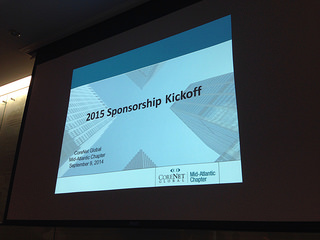
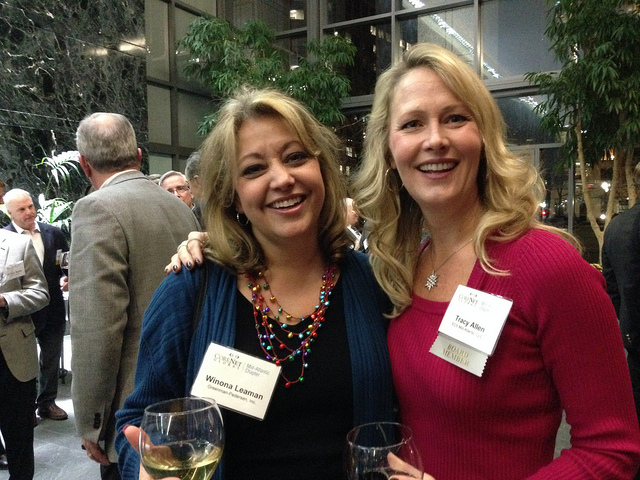
On September 9th, an energetic crowd gathered at Hilton Worldwide's Fireside Cafe for the Sponsorship Kick-Off Breakfast. Led by Sponsorship Chair, Tracy Allen, the event covered basics about the 2015 program, as well as new additions to this year's benefits.
New benefits for some levels include registrations at the Eastern Regional Symposium (ERS), coming to Georgetown University in June 2015.
|
| |
|
|
 |
|
August 5: Sponsor Appreciation Party
It was a beautiful night for baseball, networking and of course, Jayson Werth garden gnomes. Chapter sponsors were hosted by the Mid-Atlantic Board in an exclusive party suite which included ballpark favorite foods and plenty of cold beverages. Although the Nationals lost to the Mets 6-1, a great time was had by all that attended. We greatly appreciate all of our sponsors and it is because of them that we are able to deliver frequent, valuable programs and events throughout the year.
|
| |
|
|
 |
|
June 24: CityCenterDC Tour and Happy Hour
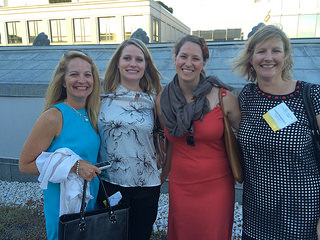
Hosted by the Mid-Atlantic Chapter’s Young Leaders, over 50 attendees participated in a tour of CityCenterDC, a 10-acre, 2.5 million square foot mixed use development. The tour was led by representatives from Hines. Immediately following the tour, guests were treated to a happy hour networking event on the rooftop of CBRE’s offices. The weather could not have been more cooperative. Deputy Mayor of Washington, DC – Jeff Miller was in attendance as well as members of the District’s Economic Development group.
|
| |
|
|
 |
|
June 19: The Next Evolution in Capital One’s Workplace Design
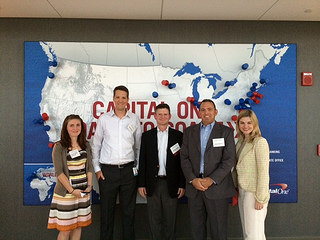
Attendees were not scared away by the Tornado watch, hail or thunderstorms! They enjoyed a tour of the recent campus expansion of Capital One’s West Creek campus in Richmond, Virginia. The tour and discussion included The Commons Building, which is centrally located with 90K sf of formal meeting space, recruitment office, cafeteria and amenities such as Starbucks, bakery, frozen yogurt and the IT retail shop. |
And the newest office building boasts 200K sf with a variety of workplace solutions to deliver choices to employee work groups. Unique furniture and designs are being piloted to enhance collaboration and flexibility. Demountable walls have been installed throughout to give quick churn in an ever expanding and dynamic business environment. Sustainability was a priority and earned 4 out of 4 Globes in the Green Building Initiative’s Green Globes Rating System with water efficiency, native landscaping, lighting upgrades, electric vehicle charging stations and community gardens where employees farm their own vegetables on the campus. It was evident that the real estate team is a partner in maintaining a strategy for Capital One being a Great Place to Work.
Thanks to the following speakers:
Moderator: Kristen Inghram, Account Executive, Tandus-Centiva
Panelists:
-Billy Baker, Central Virginia Regional Lead, Workplace Solutions, Capital One
-Stephen Evanko, Business Director, Workplace Solutions-Environmental Sustainability Office,
Capital One
-Carter Mackey, Delivery Team Lead, Central VA Region, Workplace Solutions, Capital One
-Christina Smith, Innovation and Workplace Solutions, Capital One
And thanks to the Capital One facility personnel who accompanied the tours and added their perspectives and experiences of the workspaces: Carrie Ruban, George Holcombe, Andrew Green and Michelle Cleverdon.
Thanks to sponsors: DIRTT and Creative Workplace Interiors & Technology
And special thanks for skilfully organizing this successful event: JoAnn Lane, Education Chairperson for Richmond, and Kristen Inghram, Education Committee Member, CoreNet Mid-Atlantic Chapter. |
| |
 |
|
June 12: Preventing & Surviving an Active Shooter Attack at Your Workplace
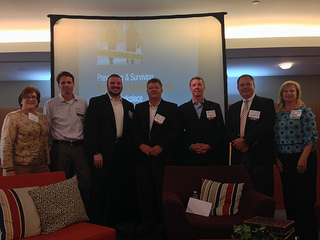
The Capital Chapter of IFMA, along with the CoreNet Global Mid-Atlantic Chapter, co-hosted a program focused on active shooter incidents - response, recovery, and prevention that was very well received. Attendees enjoyed an information packed presentation over lunch at Piedmont Office Realty Trust in Washington, DC. Moderator Todd Jasper, MEP, MsCP, C.C.M., Director, Homeland Security & Emergency Management Division, MSA, Inc. started the discussion off by giving the audience a better understanding of what an active shooter is defined as by the Department of Homeland Security (DHS), "An individual actively engaged in killing or attempting to kill people in a confined and populated area," along with a DHS video on active shooters.
|
This introduction was followed by a real account of an active shooter event by Mike Price, Sr. Manager of Building Operations at Discovery Communications. The event occurred on September 1, 2010 at their headquarters in Silver Spring. Mike discussed lessons learned, how they applied their training and preparedness to this unfortunate situation. He credited the work with the local police as being a major factor in defusing the incident, while having counselors available to employees after the incident as being critical to feeling safe getting back to work in the building. Finally Kevin Friker, Regional Security Director of North America for MARS, Inc., discussed three parts to security that every facility manager should be evaluating for their facilities. They are (1) the physical security (locking doors, exits, offices, etc.), (2) technical security (security system, alarms, etc.), and (3) the operational security (people, local police, etc.). He emphasized that how thorough and how good your policy is on coordination and facility preparedness for such events will have a significant impact on how your facility deals with a hostile intruder.
This program and the panelist had great insight on security measures, and how being prepared goes a long way to preventing or minimizing the effect of an unfortunate incident caused by an active shooter. We want to thank the annual Partners and Sponsors of each chapter for their ongoing contributions and for making it possible to bring these amazing panelists together to share best practices on dealing with an active shooter crisis. Special thanks to Piedmont Office Realty Trust for providing the event space at One Independence Square. While we do not wish this happen to anyone, we appreciate having been educated in how to deal with the situation, should it ever arise.
Contribution by: Gary McKelvey, Siemens (Capital Chapter of IFMA) |
| |
|
|
 |
|
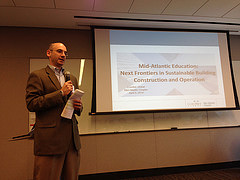
April 9: Annual Meeting & Education: Next Frontiers in Sustainable Building Construction & Operation
The April Education meeting began with a short Annual Chapter Meeting. Past President, Deane Edelman from GDIT led the meeting which covered the chapter goals for the year, health of the chapter and new Executive Committee and Board of Directors. At the conclusion of the report, the chapter thanked Deane for his years of service and presented him with a globe as a token of appreciation.
|
|
The education program, moderated by Stephen Evanko, Business Director, Workplace Solutions-Environmental Sustainability Office at Capital One, included a diverse panel who covered a wide variety of sustainability topics.
The first panelist was Frank Santella, Acting Assistant Commissioner, GSA, PBS Facilities Management & Services Programs. Frank presented GSAlink, a tool that GSA is using to monitor building analytics.
Corey Enck, Director of LEED Technical Development, U.S. Green Building Council presented LEED v4. Corey explained LEED v4 system goals as well as a few of the new requirements and changes to previous versions of LEED.
Kim Pexton, Director-Sustainable Construction, HITT Contracting Inc., highlighted innovations in sustainable building and tools for portfolio energy management.
The event concluded with a tour of HITT’s LEED Silver headquarters.
Click here to view the presentation slides.
|
| |
|
|
 |
|
March 26: CRE Millennials Take the Stage and Explore Fresh Survey Data
To stay competitive in today’s market, employers must attract and retain talented Millenials. This group will make up 75% of the global workforce by 2025. The expectations and preferences of the mobile and tech-savvy Millenials is shaping corporate culture.” On March 26th the chapter hosted an interactive discussion featuring Millenials, seasoned CREs, and workplace experts, who explored the role of Millenials in CRE and across the work force. Topics covered included workplace solutions, technology, values that influence productivity, as well as educational opportunities that have contributed to their career decisions. |
| |
|
|
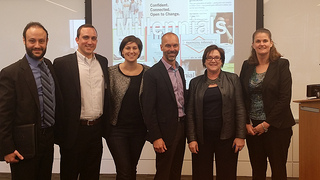
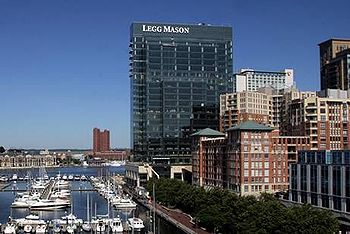
The dynamic and informative panel included Amy Beall, Vice President of Real Estate, Legg Mason and Graduate of Johns Hopkins Carey Business School-MS in Real Estate, Dinos Christoforakis, Investment Associate, MCB Real Estate and Graduate of The George Washington University, MBA in Real Estate and Finance, Stephanie Douglass, Director of Workplace Strategy, Teknion, and Al Nielsen, Vice President Corporate Services, AOL. Chris Szutz, Client Occupancy Manager, Eastern U.S. & Latin America, Ciena, served as moderator for the event.
Panelists and attendees reviewed results from a survey of active CRE Millenials that covered workplace preferences, career decisions, education, and values. Further, the panelists shared their findings with regards to preferences of Millenials and how they are addressing recruitment and retention within their respective organizations.
This was another fun and informative event that left all with lots to chatter about around the work place. Special thanks to Legg Mason for hosting and Price Modern for sponsoring catering costs and raffles. |
| |
|
|
 |
|
Feb 19:
Tysons – America’s Next Great City
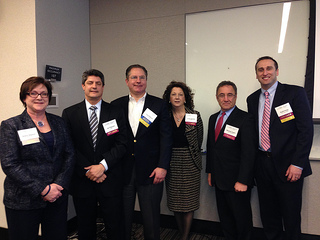
It was an all-star cast of panelists that presented, “Tysons: What’s Happening & How Does It Change the Regional Geographic Puzzle?” on February 19th at HITT Contracting in Falls Church. Moderated by Michael Caplin, Executive Director, Tysons Partnership, panelists included; Linda Bartlett, Senior Vice President & Controller/Principal Accounting Officer, Intelsat; Scott Homa, Director, Research, JLL; and James Policaro, Vice President Development, Lerner.
|
|
Tysons Corner was once a rural crossroads – Route 7 has run from Alexandria to Leesburg and Route 123 has run from Georgetown to Vienna for 200 years. At that intersection in 1851 a post office was opened and the postmaster of that station was a man named William Tyson. William Tyson eventually bought the land and it became known as Tysons Corner.
In 1962, Dulles Airport opened and one of the areas legendary developers decided he was going to build at that historic crossroads – and that was Ted Lerner. This started the transformation of this rural intersection into an urban center and eventually a shopping mecca. When the shopping mall opened in 1968 it was the largest enclosed shopping center in America.
The “boom” began.
By 2008 Tysons had 45 million square feet of office space, but it has a daytime population of 100,000 people and a night time population of 18,000 people, which means approximately 82,000 people per day are commuting, which doesn’t include the shoppers. With only a few arteries, the roads were packed and the business community was concerned.
Around 2004, it was decided that metro would be coming to Tysons. The Board of Supervisors thought this presented an opportunity to rethink the way they were going to allow Tysons Corner to be redeveloped. It allowed a whole new transportation component and opportunity. In 2010, they passed the Comprehensive Plan for Tysons. The Plan addressed six key elements: Land Use, Transportation, Environmental Stewardship, Parks and Open Spaces, Amenities and Urban Design Standards. The plan stresses mixed-use, transit-oriented development.
Most of the new Tysons developments have residential, office, retail and entertainment and are within a half mile of a metro stop. A new set of roads will allow better connectivity to lighten traffic on Routes 7 and 123. New fire stations, schools, parks, recreation centers will also be built to support the Tysons community. Tysons has eight districts which in time may develop into individual neighborhoods, each with its own personality and flavor.
Tysons Corner’s past success has been driven by the typical real estate adage – Location, Location, Location back in the 60’s, 70’s and 80’s when car was king. It was the ultimate compromise location for companies that were drawing upon their workforce in Upper Northwest, Bethesda, Fairfax County and Montgomery County.
The overall tenant base is static of which 80% are federal agencies, law firms, and government contractors. These tenants are looking to do more with less. Technology and building design has helped enable that. As a result, even when tenants are gaining in head count, they don’t necessarily need to take on additional space. Two-thirds of millennials (which will make up 50% of the workforce by 2020) would prefer to have a smart phone over an automobile. They tend to prefer an urban lifestyle to a suburban lifestyle. These demographic shifts are critical and impact the office market. In just over the last 12 years, Tysons Corner has only seen 10 million square feet of office occupancy growth; over that same time, Rosslyn/Ballston, which is a more transit-oriented community and younger demographic has seen three times as much growth, and downtown Washington, DC has seen 15 times more growth.
Over half of all office space in Tysons Corner was built in the 1980s and even more of that was built in the 1960s/70s, which doesn’t make it well-suited for today’s workforce. This makes the new office developments that much more important.
If Tysons wins, who loses? DC lost Intelsat. The nearby jurisdictions that have higher taxes and additional barriers to entry, specifically Prince George’s County, Montgomery County could also be at a disadvantage. Also, suburban locations that lack rail access and walkability like Fairfax Center and Bethesda Rock Springs.
Intelsat is the operator of the world’s largest satellite services business. Intelsat became a public company in April of 2013. What impacted their decision to move to Tysons Corner from Washington, DC? Their current building in the Van Ness neighborhood near University of DC, is made up of 14 octagonal pods that are connected by walkways which does not work well for a company that does a lot of collaboration. Intelsat wanted space that was much more open. Their existing building has over 500,000 RSF but they only needed about a third to half of that. The building was also 30 years old and a decision had to be made. If they stayed, Intelsat was going to have to heavily invest in upgrading the building. It was very important that Intelsat sell their building and sign a lease in a new building very close in time to one another, which they were able to do. They looked for space in a 10 mile radius from their existing headquarters in order to keep much of their workforce in place of which 60% live in Maryland.
Transportation was very important in choosing a new location with 15-20% of Intelsat’s workforce traveling by metro or other form of public transportation every day. Physical attributes were also very important – they wanted an urban feel, great amenities like a gym in the building, opportunities to bike to work, electric chargers in the garage. They really were thinking about the next generation of Intelsat employees and younger workforce. Economics were also very important. Taking all of these things into account in a comprehensive evaluation brought the list of 100 properties down to four. Intelsat seriously looked at a property in Bethesda, Tysons, Ballston and in DC near Nationals Park.
A transformation for Intelsat will be going from 85% closed space to 85% open space in their new offices. They know it will be a cultural change, but one for the better. They will move into their new space in July 2014.
Lerner is a 60-year old private development company and one of the oldest in the Washington, DC Area. Lerner has over 20 million square feet of office and retail development and over 8,000 multi-family units in Virginia, Maryland and Washington, DC.
Tysons II is Lerner’s flagship development. Lerner’s existing portfolio in Tysons Corner includes Tysons Corner Center, Tysons Galleria, the Ritz-Carlton, 1750, 1650, 1600 and 1800 Tysons Boulevard – totaling approximately 2.6 million square feet. Lerner was able to rezone up to six million square feet. Lerner’s last building in Tysons Corner was completed over 10 years ago. Economic conditions and other factors kept Lerner from further development until now. Currently under construction is 1775 Tysons Boulevard which will be delivered in 4Q 2015. The building is 476,000 SF of Class A office space. A climate controlled walkway through the development is one of the key features of the project. The walkway will go all the way through 1600 to 1800 Tysons Boulevard. In addition to the office project, Lerner does have planned residential development – 500 units in two towers.
View program slides.
Click here to view the new downtown Tysons |
| |
|
|
 |
|
Dec. 6: Holiday Party
The Mid-Atlantic Chapter celebrated the end of the program year with a festive holiday party on December 16. The event was hosted by Piedmont Office Realty Trust at their building located at 4250 North Fairfax Drive in Ballston. The chapter thanked outgoing President, Deane Edelman with General Dynamics IT, who turned the reigns over to incoming President, Pierce DeGross with Hilton.
Guests were asked to bring an unwrapped gift to benefit The Marine Corp. Toys For Tots Foundation. We were thrilled with the amount of donations received, thank you to all who donated. We would also like to extend a special thank you to our event sponsor, Ballston BID.
|
| |
|
|
 |
|
Nov. 21: New Urbanism - The Impact on Your Corporate Real Estate Decisions
Live-Work-Play development is one of the hottest trends in real estate today and is spurred by the need to attract and retain workers. The workforce is changing – Millennials will make up 75% of the global workforce by 2025. This group is more likely to decide where to live first, then find a job.
|
Amtrak’s Northeast Corridor is made up of eight cities from Washington, DC to Boston; covers 899 miles; 2,200 daily trains; 2,000 commuter trains; 140 inter-city trains; 60 freight; and 260 Million annual passenger trips. With 13 Million new residents projected by 2040 within the Northeast Corridor and 80% of residents living within 25 miles of an Amtrak station, Amtrak is reinvesting and planning for sustained growth. Major projects taking place at Baltimore’s Penn Station, Washington’s Union Station, and New York’s Penn Station will allow the system to grow and make rail an even better option for commuters.
Economic Development plays a key role in securing new tenants and retaining existing tenants in a jurisdiction. Baltimore has a few success stories when it comes to Live-Work-Play. One of their greatest success stories and a poster child for L/W/P comes from Under Armour – a homegrown company that has dedicated itself to the City and one where 88% of the workforce lives in the City of Baltimore. Another example is Morgan Stanley who moved from New York to Baltimore (Fells Point) with 56% of the workforce living in the City. One of Baltimore’s focuses for future tenants will be home-grown technology companies whose high growths workforce will create demand for Live-Work-Play developments.
Baltimore’s Beatty Development has some of the most exciting developments underway and planned for the City of Baltimore. Harbor East, where our event was held, is quickly becoming one of the City’s hippest areas. The development is one of the ultimate New Urbanism developments including a Four Seasons hotel, upscale shopping and dining options, movie theater, office and residential, all located on the Baltimore waterfront.
Also on the boards for Beatty includes Harbor Point – set on 30 acres and planned to be twice the size of Harbor East. Harbor Point will have approximately 10 acres of open outdoor space/park. Harbor Point is planned for six million square feet of mixed-use space. The first project, completed in 2010, was a 270,000 SF LEED Gold office building for Morgan Stanley and Johns Hopkins Medicine International. A new headquarters of Exelon’s Constellation business unit will be delivered in 2015. This phase comprises office, apartments, retail and parking.
Moderated by Chip Olsen of CBRE, our expert panel included: Bob LaCroix, Chief Corridor Development, Amtrak-NEC Infrastructure & Investment Development; Ursula Powidzki, Assistant Secretary for Business and Enterprise Development, Maryland Department of Business & Economic Development; Bryce Turner, President & Urbanist, Brown Craig Turner; and Michael Beatty, President, Beatty Development.
|
| |
|
|
 |
|
Nov. 12: Changing World of Data Centers
The Mid-Atlantic Chapter had the unique opportunity to hear from Richmond-area experts on the aspects of data center real estate and tour QTS’s White Oak facility. After a brief networking and happy hour there was a panel presentation consisting of the following:
*James Swoop, Quality Technology Services
*Gary McLaren, Executive Director, Henrico County Economic Development Authority
*Barry Mattherly, Executive Director, Greater Richmond Partnership
|
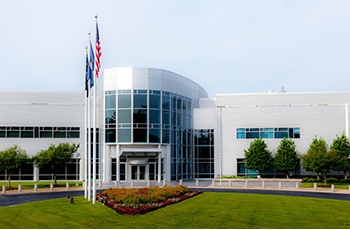
The discussion was moderated by David Williams, Managing Director of Colliers International | Richmond. Most of the discussion was regarding the challenges of finding infrastructure necessary to sustain a tier three or higher data center in Central Virginia. We learned that many of these infrastructure challenges are typically surrounded by the demand and availability of power, water and fiber providers. Additionally, it was discussed that Henrico County, the Greater Richmond Partnership and the State of Virginia are influential when it comes to negotiating economic incentives for data center development. We also learned about the Quality Technology Services (QTS) facility located in Sandston, VA, which is a former Semiconductor Chip Plant comprised of approximately 200 acres and is 1.3 million square feet in total. The total square footage is broken down into 300,000 square feet of office and has approximately 600,000 square feet of additional space, including the raised floor data center space.
There was an additional question and answer session at the end of the panelist presentation that dealt with site selection and other economic related incentives surrounding the typical data center projects. The event concluded with a tour of the QTS facility.
|
| |
|
|
 |
|
July 25 - Mid-Atlantic Presents: Home of the Ravens - M&T Bank Stadium "Behind the Scenes" Tour
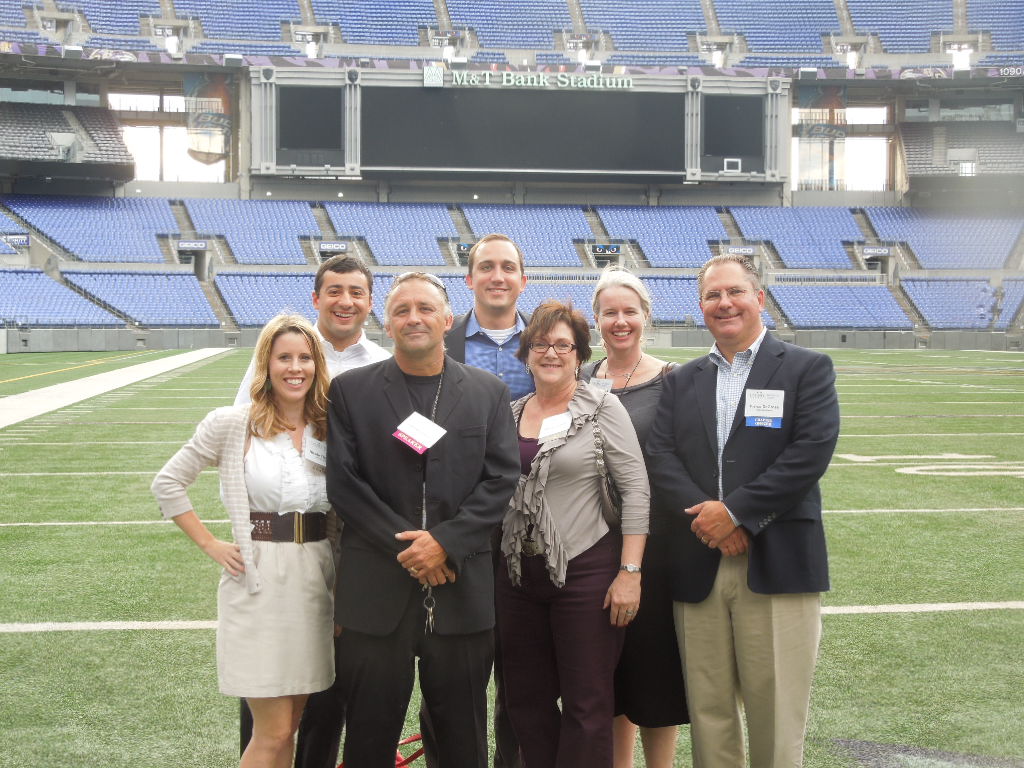
The sold out crowd of CoreNet Global Mid-Atlantic Chapter members and guests, were thrilled to get a “behind the scenes” tour of M&T Bank Stadium on Thursday, July 25th. Our host was Jeff Provenzano, Director of Facilities for Maryland Stadium Authority. Jeff’s responsibilities include overseeing operations and maintenance of the 92-acre facilities that encompass M&T Bank Stadium, Orioles Park, the Museum and the Warehouse. Highlights included a tour of the jail cell, locker room, football field and a spacious sky-box.
|
|
Jeff spoke about the recent renovations that fans will enjoy this upcoming season. Attendees learned about the pending LEED EBOM efforts, a project that when completed, will make M&T Bank Stadium the first NFL stadium to accomplish. From energy efficiency measures to preventative maintenance, Jeff’s core staff and thousands of seasonal workers stay busy year-round to keep their tenant, the two-time Super Bowl Champion Baltimore Ravens, comfortable and productive. While football is the main operation, Jeff and his staff are involved in many special events that fill the 70,000 seats, such as concerts, soccer matches, monster truck jamborees, and Hollywood movies.
Jeff shared the operational demands that he and his staff experience. His partnership and shared mission with the Ravens helps prioritize operating budgets and capital expenditures.
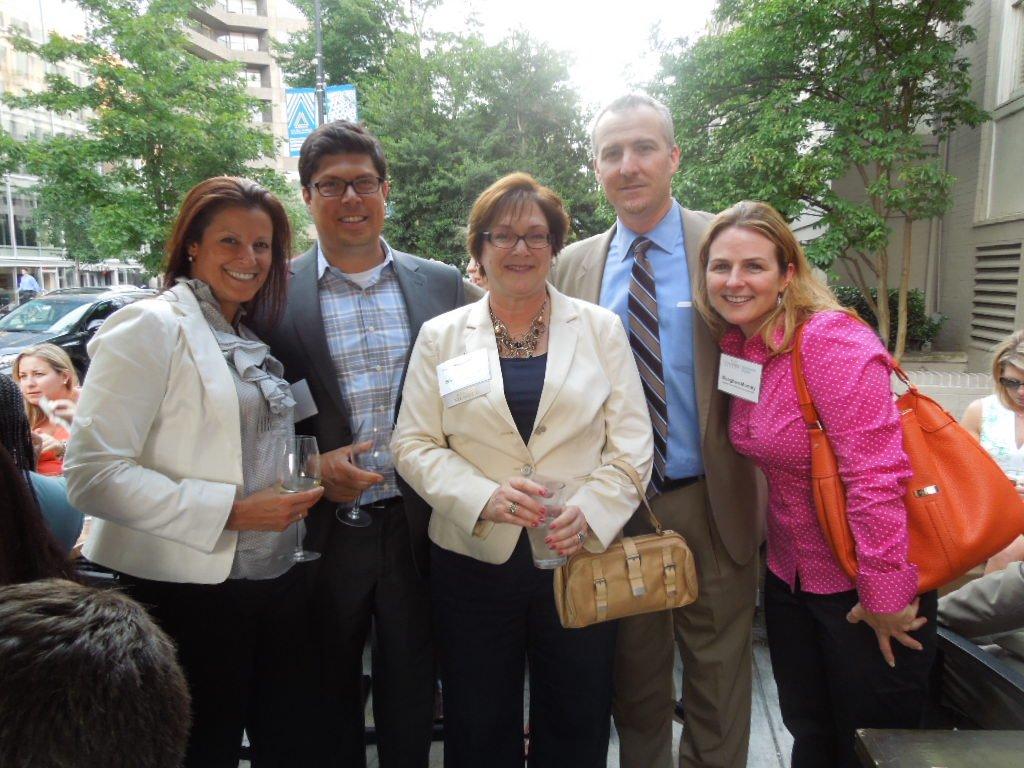
After the tour, attendees enjoyed some networking time, sampled some delicious local delicacies and relaxed with cool drinks. Members traveled from as far as Richmond to attend the event, and found it well worth the trip. A wonderful time was had by all.
Special thanks to Price Modern and Tandus Flooring for sponsoring this one-of-a-kind event!
|
 |
|
June - Summer Networking Happy Hours
The Mid-Atlantic Chapter held two happy hours in June, one in Washington, DC and the other in Richmond. The networking happy hours brought together chapter members and other real estate professionals in a casual atmosphere where they could connect and celebrate summer. With momentum of being held on the tails of the Eastern Regional Symposium, the DC happy hour took place at Irish Whiskey Public House on June 19th posting over 80 guests. The Richmond happy hour was hosted at the Capital Ale house on June 25th. All in attendance were able to cool off with cold drinks and enjoy light fare at two of the best neighborhood spots in the region.
|
 |
|
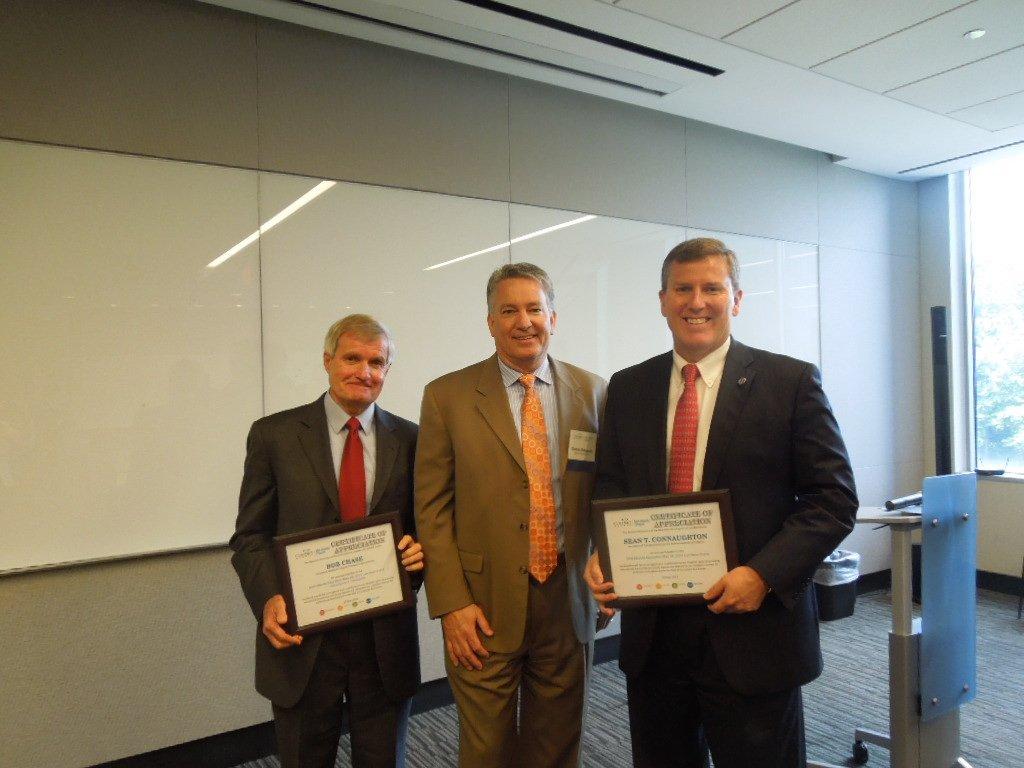
May 29 - Mid-Atlantic Presents: Secretary of Transportation, Sean Connaughton
The Mid-Atlantic Chapter of CoreNet was honored to have Virginia’s Secretary of Transportation, Sean Connaughton as the keynote speaker at the June education luncheon. A key issue for many living in the Washington, DC Metropolitan Area, the event included a lively question and answer session.
|
|
Secretary Connaughton oversees seven independent
agencies, some which include: VDOT, Department of rail and public
transit, Port Authority of Virginia, DMV, Motor Vehicle Regulation
(sales), and Virginia commercial space flight authority.
Some fun facts:
- Virginia is one of the few states
with a Freight Fund – 40% of the state’s economy needs rail to move
goods. The largest industry in the state is agriculture.
- Virginia has one of the most
automated DMV’s in the country. The DMV on Gallows Road in Tysons has 40
different languages spoken.
- DMV has a law enforcement side – they are the tax collectors –
- One of only three launch-sight facilities in the country at Wallops Island.
Commonwealth Transportation Fund (CTF)
Virginia doesn’t receive any general
revenues for transportation. All the money from gas tax, sales tax,
insurance sales (from car rentals) goes into the CTF.
Sub funds of the CTF:
*Transportation Trust Fund – Capital Account
*Highway Maintenance & Operations Fund
CTF is going down dramatically due to
inflation and fuel efficiency. Gas tax was the largest single source of
revenues coming in. 85% goes into the M&O Fund. Last time the gas
tax was raised in 1986, the fleet average was 10 miles/gallon; now the
fleet average 22 miles/gallon. By state law, Virginia is a maintenance
first state. After debt service, all remaining funds go to
maintenance.
To help right the ship, the state
government decided to lower the gas tax and move over to a sales tax
system for transportation. The gas tax has been lowered by a third
(10.5 vs. 17.5 cents). The only state with a lower gas tax is Alaska.
The sales tax will rise .3% statewide. The motor vehicle tax has also
been raised and there is now a hybrid tax. The hybrid tax will equal
out what everyone pays on gas tax.
Regionally, in Northern Virginia, the
sales tax will go up to 6% (.3% state/.7% for NoVA) The money will stay
here in Northern Virginia: 30% will go to local governments and 70%
must go to regional projects that increase capacity and will reduce
congestion. The Northern Virginia Transportation Authority will decide
how money will be spent. It means approximately $350 Million / Year for
Northern Virginia transportation.
New taxes go into place July 1, 2013.
Projects to look forward to:
- $450M/year in paving – next 6 years
- Rt. 606 widening behind the airport ($40M commitment)
- Rt 28/66 Interchange – rebuild ($40-50M)
- Widen 66 to Haymarket
- New Bi-County Parkway, connecting 66 and 50 to the west side of the Manassas Battlefield
- 66 outside the Beltway – express lanes or rail or combination
- Unify technology in operations centers (changing lights, control lights based on accidents, etc.)
- Looking at potential Air Rights over 66 at East Falls Church
- Potential 395 Express lanes through Alexandria and Arlington
|
| |
|
|
| |
|
April 23 - Education: Sustainability - Earth Day Every Day
From AOL’s hip office on the Under Armour campus, the CoreNet crowd participated in a lively discussion on Sustainable best practices. Speakers stressed that it is possible to promote Earth Day Every Day by instituting policies and gaining corporate support from all levels.
Brian Dean, Vice President of T Rowe Price Associates, Inc., introduced the topic by reflecting on where CREs are on the journey towards having less of an impact on the Earth. Beginning with LEED, as the original CRE framework for sustainable activity illustrates great progress: Nearly 3 billion square feet of LEED certified space globally, 180K LEED accredited professionals, and LEED is now the new normal. Companies farther down the path are shifting their focus towards efforts such as: net-zero, linking sustainability with corporate social responsibility and the health & wellbeing of the individual. Brian stressed the importance of being on the journey whether you are just beginning to explore LEED, measuring energy consumption or identifying your carbon footprint or setting targets.
The three panelists shared their unique perspectives with where they are on their sustainable journey.
First, Adam Stoltz, Director of Strategy at CBRE, stressed that reducing the carbon footprint starts with the footprint. He discussed workplace strategies that maximize full utilization of buildings while offering employees flexibility to work in new ways. Measuring improvements and behavioral changes is what makes for an impactful story.
Next, Stephen Evanko, Director, Environmental Sustainability Office at Capital One, explained that sustainability fits with corporate core values. He shared best in class industry practices as it pertains to curbing greenhouse gas emissions, engaging associates with green corps and pilot programs for electric vehicle charging and habitat certifications. By engaging IT, laptops are donated at end of cycle. The key is looking for opportunities to leverage cost and revenue.
Lastly, Stacey Cohen, Director, Corporate Facilities, Marriott International, reaped benefits by identifying low hanging fruit such as waste stream management practices with trash and recycling, introducing disposable products and composting, moving to daylight cleaning - to name a few. Stacey featured a case study of Marriott’s 800,000 square feet/1978 headquarters building and transforming it into the LEED Gold project in 2009 with significant financial impact and bottom line payback.
All presentations underscored innovative approaches to achieve results and all agree, it’s the right thing to do - to be on the journey of promoting sustainable practices.
|
| |
|
April 4 - Education: How Benchmarking Affects Workplace Solutions and Strategies
April’s education event was an interactive presentation filled with audience participation. Our experts: Fran Neville, Senior Manager – Real Estate, General Dynamics Information Technology; David Guin, Global Workplace Strategic Planning and Analysis, Computer Sciences Corporation; and Arnold Levin, Managing Director of Strategies, IA Interior Architects; discussed the effects of benchmarking on workplace solutions and strategies.
Our panelists agree – you need the metrics, but it is not all black and white. While more and more organizations are moving to open plan and smaller square footage per person, there are studies that believe this may not be the best thing for our workforce. Some companies have moved to completely open plan where even the CEO is on the floor. Employees need different environments in which to be productive and work efficiently. Quiet time and focus space are important. IT support is needed in collaborative areas and one-man conference rooms/phone booths. Technology is playing a big role – are companies able to keep pace? No one can predict future needs, but understanding your organization’s business strategy, work processes and how you work, coupled with metrics is a good place to start.
Click here for access to the presentation
|
| |
|
March 14: Annual Meeting and Happy Hour
Lorena Stranigan, President of the Mid-Atlantic Chapter, presented a review of the 2012-2013 strategic initiatives and achievements at the Annual Meeting and Happy Hour.
Highlights of Achievements:
Membership: The Chapter experienced an increased membership of 18% and an all-time high of 390 members was reached, despite economic pressures. 60% of new members over the year were End Users.
Education: In addition to events in the Washington, DC Metropolitan Area, an increased amount of events were scheduled in the Baltimore and Richmond areas.
Financial Stability: The Chapter is financially strong and well positioned for future administrations.
Sponsorship: Sponsorship packages were restructured with a lower entry point.
Finally, the reigns were passed to incoming President, Deane Edelman who announced the incoming 2013-2014 CoreNet Mid-Atlantic Executive Committee and Board.
The new executive committee includes:
Deane Edelman, President – General Dynamics Information Technology
Lorena Stranigan, Past-President – Kaiser Permanente
Pierce DeGross, Vice President/President-Elect – Hilton Worldwide
Joanna Hoffschneider, Secretary
Stacey Cohen, Treasurer – Marriott
|
|
|
|
February 26 - Education: Planning an Office for the Next Generation
On February 26th, 36 attendees representing the largest Richmond Chapter Event participation in over two years gathered at Thalhimers/Cushman&Wakefield office. Thru the use of TV comedy, slides, charts and voice communications, presenters Kay Sargent, Teknion, and Andrea Fitch, Kramer Consulting, enlightened the group on the differences between multigenerational workforce, and the next generation’s impact on the way we work and it’s affect upon the workplace. Special thanks to CORT for sponsoring this event.
Click here for access to the presentation.
Click here for access to supporting information.
|
|
|
|
January 31 - Education: 2013 Regional Real Estate Forecast
On January 31st chapter members gathered at HITT Contracting in Falls Church, VA to listen as the region's top real estate economists discussed the outlook for 2013. The following industry leaders served as panelists: Paula Munger, Regional Research Director - Mid-Atlantic Region, Cushman & Wakefield, Jae Lee, Senior Vice President and GSA Specialist, Jones Lang LaSalle, and Bill Kaye, Executive Vice President and Capital Markets Specialist, CB Richard Ellis. The experts offered overviews on the following areas: Regional Mid-Atlantic Real Estate; GSA & Public Sector; and Capital Markets. Thank you to HITT Contracting for hosting this event!
Click here for access to the presentation.
|
| |
|
December 12 - Chapter Holiday Party
On December 12th more than 150 chapter members and guests celebrated the holiday season with hors d'oeuvres, drinks, dessert, and raffle prizes at SRA International in Washington, DC. Members brought more than 100 toys to donate to the Marine Toys for Tots Foundation, as a way to give back to the community. Special thanks to SRA International for hosting the holiday party and to IST for sponsoring the event.

|
| |
|
|
| |
|
December 6 - Richmond Holiday Party
On December 6th, members of the Corporate Real Estate community gathered at MOI's Richmond Showroom, within the James Center, to celebrate the Holiday Season through fellowship and networking. In keeping with the spirit of the season, many of the guests brought gift cards that will be donated to St. Jude Children's Research Hospital. Thank you to everyone who made a donation. Special thanks goes to our event sponsors: MOI, Tandus Flooring and VA EDP.

|
| |
|
|
| |
|
November 13 - Education: Leveraging Social Media
Mid-Atlantic Communications Committee hosted an evening of Social Media education on November 13 in Washington, DC at the Herman Miller Showroon. Evan Gassman with the David All Group explained the evolution of social media, presented an overview of the different Social Media offerings, and provided ideas on how to use them to propel ideas, make connections, and gather information. After the presentation, attendees participated in hands-on breakout sessions led by our CoreNet Social Media experts in the following areas: LinkedIn Beginners, LinkedIn Intermediate/Expert, Twitter, Blogging, and Facebook. Groups rotated once, allowing them to explore two areas. After the session, the attendees enjoyed a networking cocktail party, hosted by Herman Miller.
|
| |
|
|
| |
|
November 8 - Education: Driving Improved Returns With Strategic Initiatives
Today’s economic conditions are putting pressure on CREs to reduce expensive overhead. On November 8th, Members gathered at T. Rowe Price in Baltimore, MD to learn from their colleagues about the many affordability initiatives that are taking place and how CREs can manage in uncertain times. Senior CRE and industry leaders, well versed in the Baltimore and Mid-Atlantic Markets, served as panelists - Deborah Kuo, Vice President, Real Estate & Facilities, Exelon, Robert A. Manekin, Managing Director & Principal, Colliers International | Baltimore Region and Thomas M. Fulcher, Jr., Executive Vice President, Studley. They provided an overview of headquarter development strategies and decision making for a large corporate real estate initiative. The program was followed b
|